


This week, cities are in the spotlight for their abilities to change not only the lives of their residents but to shape the national narrative. Birmingham is looking to roll out 20mph speed limits, despite the culture warriors; London is pushing back gently against the rush to robotaxis, and we ask what the future of devolution in England will look like - via some less evolved thinking in one city authority. Meanwhile, how much does the ‘eye-level’ street environment impact our health?
BIG STORIES FOR CYCLING ADVOCACY
WITH GREATER POWERS... John Harris’ latest Guardian piece discusses the challenges for Andy Burnham’s government of delivering on devolution in the ‘maddeningly short’ timeframe of three years before the next elections. This piece galvanised some thoughts of my own. For example, with regional and metro mayors in England due to keep a portion of locally-generated business rates from April, there are questions to answer around the relative lack of scrutiny of mayors outside of London, often via frankly weak ‘scrutiny committees’ with no real teeth. Real devolution might need to look towards a London Assembly-style chamber, in which a mayor is held to account via elected Assembly members. Without this, the spending of locally-generated public funds, and the delivery of devolved powers, will be too opaque.
NO SPACE FOR PEOPLE? Britain has a remarkable habit of preventing the very things that make communities sociable, just in case they attract anti-social behaviour. For those who can’t walk far, a place on the street to sit and rest can mean the difference between going out and not, but too often seating becomes the victim of ‘anti-asb’ fears. Case in point, Westminster City Council in London has told an 89-year-old resident she can no longer keep a bench and pot plants on the pavement outside her house, after complaints from another resident. She says she’s been beautifying the street for years and plans to resist the order. There has to be a better way of managing our streets for what we do want, rather than what we don’t.
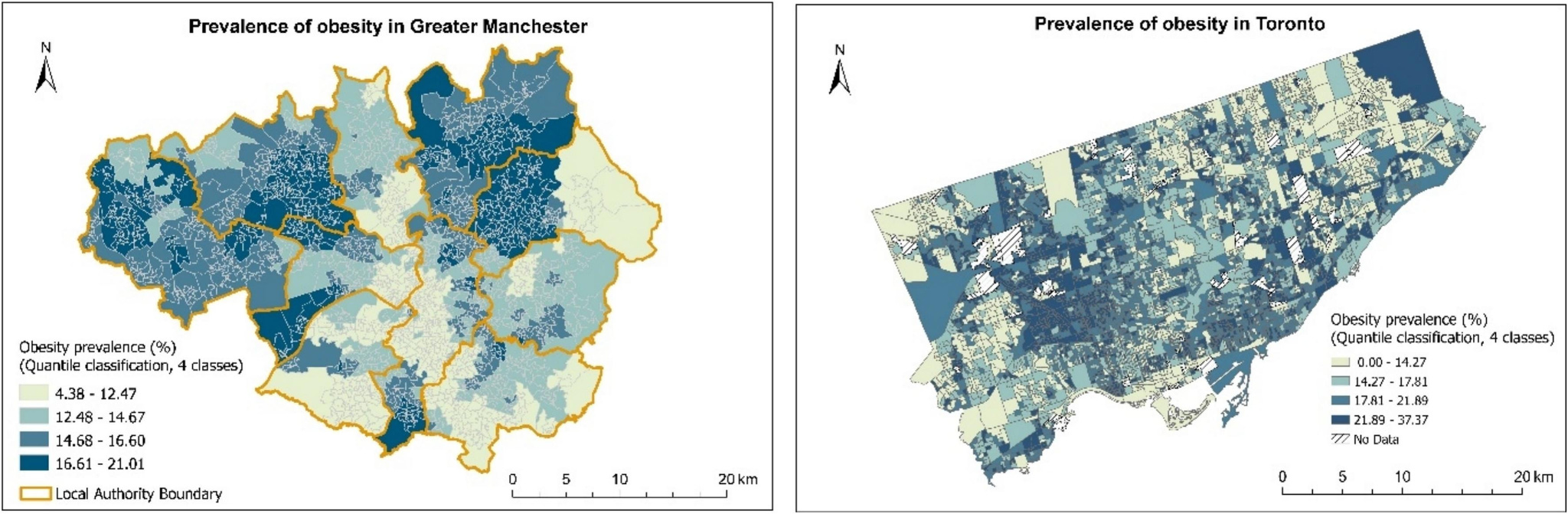
OBESOGENIC ENVIRONMENT, QUANTIFIED. Obesity is shaped by the built environment, yet evidence remains incomplete regarding how ‘eye-level’ street characteristics relate to obesity across different urban contexts. New research has quantified how these street-level conditions (perceived beauty and safety, the presence of vegetation, the local buildings and quality of pavements) combine with neighbourhood factors, like access to transport, food and green space, and overall land use shape obesity levels locally. Researchers looking at Greater Manchester and Toronto found in both cities street-level characteristics were within the top ten variables impacting obesity, in a list which included things like socioeconomic deprivation and commuting by car or van.
BIRMINGHAM 20MPH (AGAIN). Having worked in local government in Birmingham, I know that this is not new news, but it has got many newspapers excited. We should remember that excess speed is likely the biggest contributing factor to road death and serious injury. After declaring a road safety emergency in 2024, Birmingham City Council has reiterated long-held plans to reduce traffic speeds on local roads, city-wide, to 20mph. Writing in the Guardian, transport expert Christian Wolmar says while ‘culture war motorists’ may rail against the changes, this is the direction of travel, across the world. Wolmar cites Paris, London, New York, Bogota and Copenhagen as the frontrunners England’s second city is now joining. Evidence, Wolmar says, is on their side and, if we’re to clear up our air, improve safety and refocus cities around people, rather than cars, it needs to become harder to drive in those cities.
JAPAN TOO. Japan has slashed the speed limit from 60km/h (37mph) to 30km/h on residential roads in an attempt to reduce deaths and injuries among pedestrians on its narrow urban streets. The new limit, which went into effect on Tuesday, applies to residential roads with no centre line or maximum speed signs
ROBOTAXI ROLLOUT DELAYED. The rollout of autonomous taxis on London’s streets will no longer take place this year, after reality pushes back on government hopes. While trials were fast-tracked by transport secretary Heidi Alexander to spring 2026, Transport for London hasn’t published the guidance companies will need for services to operate in the capital. TfL says no robotaxis have been approved by the Driver and Vehicle Standards Agency yet, and it hasn’t received any applications for a permit or consent to operate. The capital seems in no rush: ‘a huge amount of work’ is going on behind the scenes, according to TfL’s director of strategy.
OTHER HEADLINES
NO EARLY RELEASE FOR KILLER DRIVERS. Dangerous driving can devastate lives, leaving a trail of destruction and grief in its wake. Lifetime bans for dangerous drivers are vanishingly rare. And they are often tied to a prison sentence - i.e., the two run in parallel - meaning killer drivers can get behind the wheel again once released. It may be a relief for affected families that those in prison for causing death by dangerous driving will not see early release, under new measures announced by the government. This is as part of measures intended to keep the killer of PC Harper behind bars, but has been extended to other offences.
INTERESTING GRAPH OF THE WEEK:
Obesity levels in Greater Manchester and Toronto, with darker areas showing where more people are living with obesity. The built environment and local services are contributing factors, as well as the levels of driving, and deprivation. Source: https://www.sciencedirect.com/science/article/pii/S0264275126007456?dgcid=raven_sd_aip_email#f0005
ACTIVE TRAVEL WORD OF THE WEEK:
Road Safety emergency: In August 2024, Birmingham declared a road safety emergency. At the time, this meant: “the increasing number of serious incidents on the roads across the West Midlands requires emergency action”.
Until next time,
Adam Tranter
CEO, Fusion & Founder, #BikeIsBest
This newsletter is brought to you by Fusion, the agency for movers, specialising in communications and public affairs for active travel and mobility.

The "No Space for People" is particularly poignant. The UK certainly does have an extremely undesirable habit of stripping places bare of vandalisable street furniture (bins, seats, bus shelters, flower beds etc etc). It also fences off pretty much everything private, so walking (or cycling) down the street can often feel like being out in a high security prison exercise yard. Needless to say, none of this rather patronising philosophy actually encourages people to behave respectfully. One of the biggest contributors to antisocial behaviour, without doubt!