


The local election results this week have real consequences for transport policy. They have thrown many councils into no overall control - which could make implementing changes to our streets more challenging to deliver. Pavement parking is just one example; being bold enough to tackle congestion and car bloat in cities is another. Step this way for some trends, news and a great little cartoon.
BIG STORIES FOR CYCLING ADVOCACY
ONE CHANGE AT RISK. There is plenty I could worry about following last week’s local elections, but let’s look at pavement parking. Despite a clear preference from the public - 62% want to ban it, according to a recent YouGov poll - the government compromised. New powers to tackle pavement parking are available to some local authorities - but their use is optional. It would have taken bold leadership to use these powers when council majorities were the norm; this feels less likely now. London is showing where this goes already: Westminster’s new Tory administration has pledged to fight Labour mayor Sadiq Khan on pedestrianising Oxford Street. With mayoralties reliant on consensus from their constituent councils to deliver change, this could hint at things to come; I only hope I’m wrong.
DELAYING TACTICS. Low traffic neighbourhood opposition can weaponise the impact on low-income or disabled residents with claims of displacing traffic onto main roads or making vehicle access harder. While such concerns are valid and should be heard and mitigated, they can amount to delaying tactics. A new study formulates common delaying tactics, including redirecting responsibility onto individuals, i.e. cyclists can take care of themselves; emphasising the downsides; pushing for easier solutions, like electric vehicle rollout; and surrendering, i.e. claiming people won’t or can’t change their behaviour. It’s useful to have a framework, to help sift out genuine concerns from potential hidden agendas.
THE SLOW LANE. The Guardian’s latest series examines the impact of car dependency on cities, notably in the US. Their stories of Americans living without cars, and the challenges they face in linking badly-connected public transport with walking and cycling trips, is particularly eye-opening. It shows what happens with decades of underinvestment in both modes, and how it makes residents’ lives harder. With oil prices pushing up the already-high cost of motoring in an already acute cost-of-living crisis, the problem is more stark than ever.
MEANWHILE, IN EUROPE. Across the EU, ever-larger SUVs have been allowed to proliferate. These heavier vehicles, with their tall bonnets, cause greater harm to other road users, while worsening pollution and damaging the streets themselves. As car bloat continues apace, European cities are starting to push back - including Paris’ weight-based parking charges, while London considers something similar. One estimate puts the potential revenue of a proportionate UK tax on larger private vehicles at £2bn. However, with the ongoing energy crisis, it’s energy experts ringing the alarm on the waste of resources these oversized cars represent.
DOES VIENNA NEED MORE STICK? Vienna has an excellent public transport system, with a network of regular, well-organised trams, trains and buses - and yet a quarter of trips are still made by private car. This piece examines whether, like many European cities, the carrot approach, i.e. giving people tempting and effective options, has reached its limit. At some point, cities need to start disincentivising car travel for short journeys, and as the car displaced other means of transport in the last century, so the reverse is needed now.
OTHER HEADLINES
A 1980S RESPONSE FOR A 1790S BRIDGE. Traffic lights can be a blessing and a curse. While clearly useful in many situations, they can also give drivers the false impression that they can rush through with little regard to others. Residents near the historic Clachan bridge on Scotland’s Argyll coast are concerned this will be their fate - and that new lights will risk pedestrians enjoying the view from the scenic humpbacked bridge. The local authority has begun work, saying the lights are needed for safety, but locals feel differently. 1500 people have signed a petition against the plans, and it’s made national news.
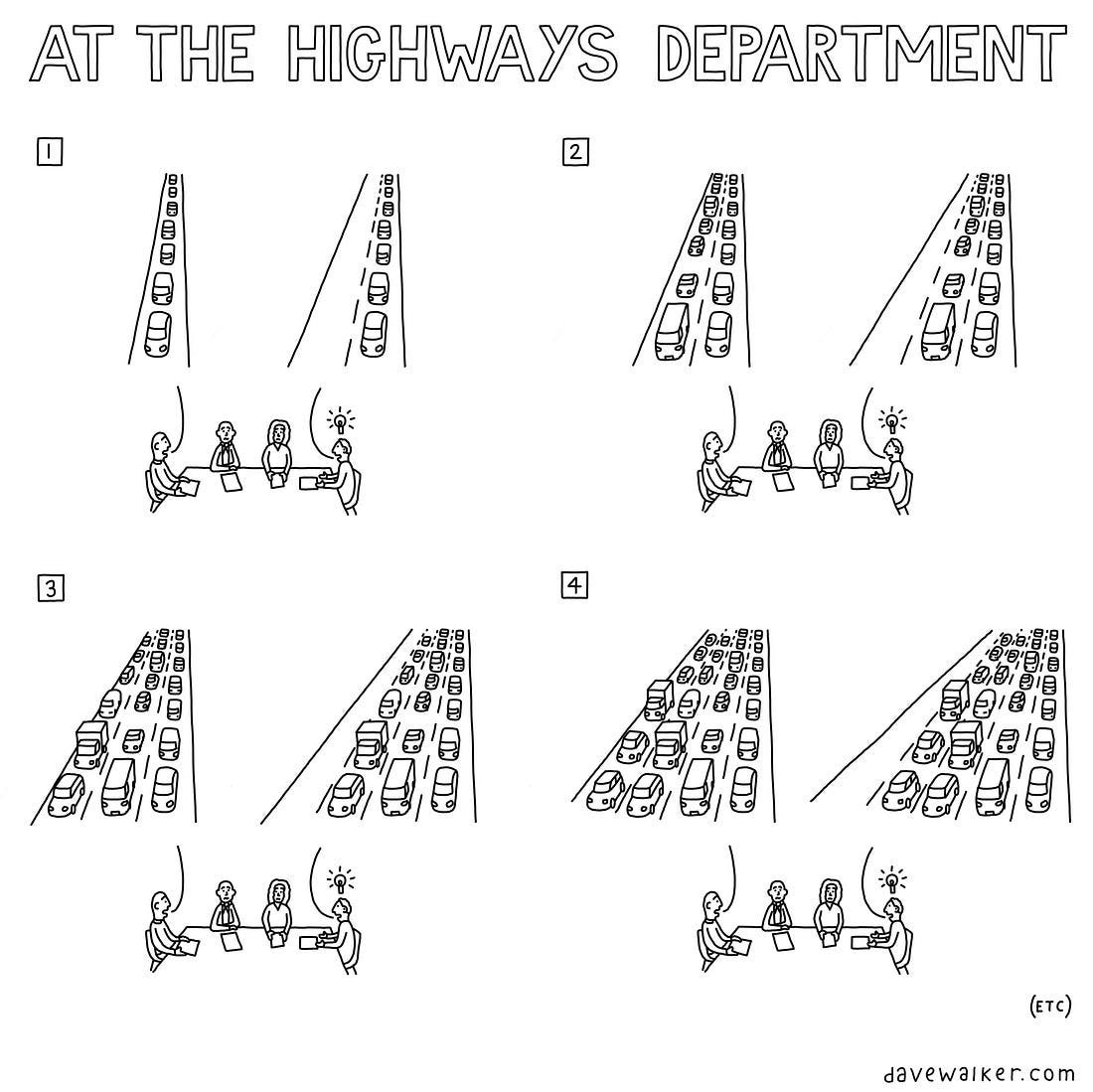
INTERESTING GRAPH OF THE WEEK: Dave Walker’s cycling cartoons illustrate brilliantly things we look at every day but somehow fail to see. This is a classic, from his latest newsletter - it’s well worth subscribing.
ACTIVE TRAVEL WORD OF THE WEEK:
No overall control. A lot of local authorities will be grappling with this problem - and how to deliver all manner of changes when their constituent members might be from across the political spectrum. How that will play out is to be seen, but we could expect to see a lot of delays to anything vaguely controversial, which sadly in 2026, still includes most cycling schemes.
Until next time,
Adam Tranter
CEO, Fusion & Founder, #BikeIsBest
This newsletter is brought to you by Fusion, the agency for movers, specialising in communications and public affairs for active travel and mobility.
On the school run there's a couple of Kia EV9 - these are so pedestrian unfriendly I can't believe they are legal.
Thank you for the mention - much appreciated.