It’s International Women’s Day this weekend; a good time to celebrate some of the brilliant women in the world of cycling, and remind ourselves that the more of us who feel welcome to cycle, the stronger the world of cycling is for it. Plus, some astonishing research on 20mph misinformation, and a reminder of how popular walking and cycling investments are.
BIG STORIES FOR CYCLING ADVOCACY
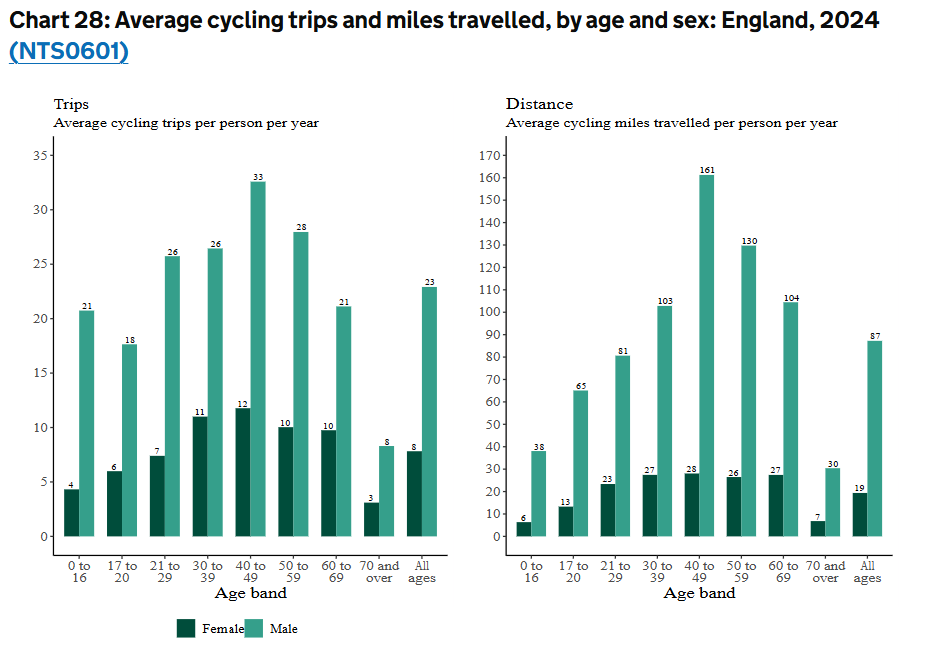
WOMEN HEROES NAMED ON LONDON HIRE BIKES. Ten inspirational women have been named on London’s Santander Cycles, to celebrate their role in paving the way for more women to ride. From grassroots leaders to healthcare professionals, to international adventurers, these ‘unsung heroes’ represent the diversity of cycling, in all its forms. Women are still under-represented in the nation’s peloton - for every girl cycling, there’s two boys, while men cycle three times as many trips as women. These heroes build community and broaden representation in cycling; they empower more women to feel cycling is a space they belong in.
BEING AN ADVOCATE. The Guardian’s Lucy Pasha-Robinson recently wrote about her horrifying experience of a man pushing her in the street. It was on an empty pavement, and he wanted to teach her a lesson, she concluded. Other women wrote to the newspaper detailing their own experiences of men pushing them - which the Guardian has labelled an ‘epidemic’. As with walking, cycling is still male-dominated, and while it’s often traffic most people are worried about, how welcome and ‘socially safe’ they feel is key. As a cycling industry, and community, we need to stand by women in their right to walk - and cycle - in safety, too.
MIS- AND DISINFORMATION IN 20MPH ROLLOUT. “The claim that 20mph limits increase crashes flies in the face of even the basic physics of kinetic energy,” notes a new paper examining misinformation and disinformation in Wales’ 20mph rollout. While social media outrage is a regular feature of streetspace change, 20mph in Wales upped the ante. Most online content at the time amounted to misinformation, the paper concludes. There was also deliberate disinformation by scheme opponents, like the term ‘blanket 20mph’, and a widespread Facebook campaign by an English politician who supported 20mph in his own area. Arming residents with the facts ahead of rollout, framing the policy in positive terms, and holding in-person consultations rather than just online ones, would help, it says. Perversely, areas with the most ‘noise’ ahead of the 20mph rollout had the greatest compliance after it, and vice versa.
YOUNG WELSH AND SCOTTISH VOTERS BACK ACTIVE TRAVEL. Young adults want streets where they can walk and cycle: that’s the conclusion of two YouGov polls in Wales and Scotland. In Scotland 74% of 1,075 16-24 year olds want safer streets for walking and cycling, while nearly two thirds support allocating 10% of the transport budget to active travel. Similarly, in Wales, 74% of 1,092 16-30 year olds want streets redesigned for walking and cycling, and six in ten want 10% of the transport budget for active travel. As time goes on it will get harder to ignore this young majority.
WALKING AND CYCLING INDEX. The Walk Wheel Cycle Trust has launched its regional walking and cycling indices, detailing active travel changes in 22 UK areas. It’s a substantial piece of work, based on interviews and surveys from people living and working in each area. The insights are unique and influential. While cycling rates vary - cycling is 4% of trips in Greater Manchester, 6% in Edinburgh and 9% in Bristol - there is a general trend of increased walking. Across the UK the Trust reckons 56% of people support shifting investment from road building to walking, cycling and public transport. Meanwhile 36% of people use a car as they feel they have no other choice. National data will be published on 17 March.
OTHER HEADLINES
WOMEN PROTEST FOR SAFER CYCLING. In our latest episode of Streets Ahead, Laura goes out across London talking to women about their experiences of everyday cycling. Research last year by the London Cycling Campaign revealed 24% of the city’s cycle routes didn’t feel safe after dark. Women often face a choice between an isolated, often unlit traffic-free path or a busy main road with no protection from motor traffic - and a third choose not to cycle in winter as a result. The podcast examines what that means for women, and some of the solutions.
INTERESTING GRAPH OF THE WEEK: The shocking disparity between men and women, in terms of trip number and length, by age. Source: https://www.gov.uk/government/statistics/national-travel-survey-2024/nts-2024-active-travel#trends-in-cycling-trips
ACTIVE TRAVEL WORD OF THE WEEK:
Social Safety: The sense of security in a space or scenario. Relating to streets, paths, public space, etc., it means how physically safe someone feels from threat. It’s used to describe how people, not least women, feel about a particular path: rather than fear of a driver hitting you, it’s more about the threat from attack by another person, seen or unseen.
Until next time,
Adam Tranter
CEO, Fusion & Founder, #BikeIsBest
This newsletter is brought to you by Fusion, the agency for movers, specialising in communications and public affairs for active travel and mobility.