This week, we’re hearing good things from Paris, where the new mayor not only cycles, but has pledged to keep up the good work of his predecessor, Ann Hidalgo. Meanwhile, some Aussies are leaving the car behind as fuel prices rise, and there’s hopes for US national greenways. Closer to home, there’s a much-needed funding boost to enable walking and cycling, and a bold new pledge to cut road traffic harm.
BIG STORIES FOR CYCLING ADVOCACY
CASH FOR CYCLING. Building safe routes is essential, but so is helping people use them. Not everyone has the confidence, knowhow or equipment to get on a bike, so community and school cycling programmes are key to unlocking the potential of cycling. That’s why a £100m boost for the Bikeability Trust, Cycling UK’s Big Bike Revival, and Living Streets’ Walk to School Outreach programme, and Modeshift’s STARS programme, among others in England, is a good thing. This multi-year funding will help give the certainty to plan ahead and deliver more, to help more people.
TIME TO EMBRACE GREEN TRANSPORT? With the US and Israel’s war on Iran ongoing, and fuel prices jackknifing wildly, providing alternatives to fossil-fuel based transport seems sensible. Australia is one of the world’s most car-dependent nations, and in its big cities most trips are still driven. Two thirds of Aussies want to cycle more, but access to public transport and safe cycling routes are patchy. Since fuel prices have spiked, however, more people are trying these options. To help, two states have made public transport free and others are reducing its costs. The federal government meanwhile, is doubling down on a clearly volatile resource, by halving fuel duty - while New South Wales sees public transport subsidy a waste of taxpayers’ money. They might all do well to build more cycle routes.
NATIONAL GREENWAY ROUTES FOR AMERICA? A bill to expand federal funding for a national network of greenways is being proposed in the States. If enacted it would kickstart a competitive grant programme to improve or build safe, wheelchair accessible greenway paths across the US. These would be of national or regional significance, while reducing the need for cars by connecting communities with each other, with public transport services and with recreational opportunities. It’s a bold move by nominating Democratic House Representative LaMonica McIver. It reminds me of calls made last year for national network planning in England’s CWIS3 strategy.
CHAPEAU, ANNE HIDALGO. Anne Hidalgo achieved an astonishing amount in her 12 years as Paris’ mayor. Facing down misogyny and outrage over her plans to cut car traffic and reclaim the streets for people and nature, she held firm on her course. Now, the Left Bank of the Seine, once an urban freeway, is a city beach. 15,000km of cycle tracks line the streets, pushing cycle traffic volumes above that of cars, and helping halve the city’s air pollution, with the help of national and EU policies. Paris streets, once lined with parked cars, are now green traffic-free oases, giving residents, not least children, places to breathe and enjoy the outdoors. This interview celebrates one remarkable leader’s achievements, as she steps down.
PARIS’ LOVE OF CYCLING CONTINUES. Happily, Paris’ newly-elected mayor, Emmanuel Gregoire, pledges to follow in his predecessor’s footsteps. Cycling around the city with supporters straight after winning the votes was a good sign. Gregoire, Hidalgo’s former deputy, has pledged to continue her work. On the shopping list is completing the citywide cycle network, transforming the ring highway into a boulevard, introducing 1,000 new pedestrian streets, and 300 hectares of parkland. He’s even pledging to end the use of chauffeur-driven cars by Paris officials.
OTHER HEADLINES
CAN ROAD DANGER BE ELIMINATED? Vision Zero is the target to eliminate road deaths and serious injuries. In London that target date is 2041, which isn’t long away given how far there is still to go. In the latest episode of Streets Ahead, Laura and I talked with London’s walking and cycling commissioner, Will Norman, about this ambition and the challenges the city will face in meeting it. We explore falling casualty rates, the city’s growing network of cycle routes, the role of 20mph, the question marks over Waymo’s ‘safer’ driverless cars and some forthcoming political headwinds.
INTERESTING GRAPH OF THE WEEK:
A picture, this time. The cheapest petrol is the petrol you don’t use.
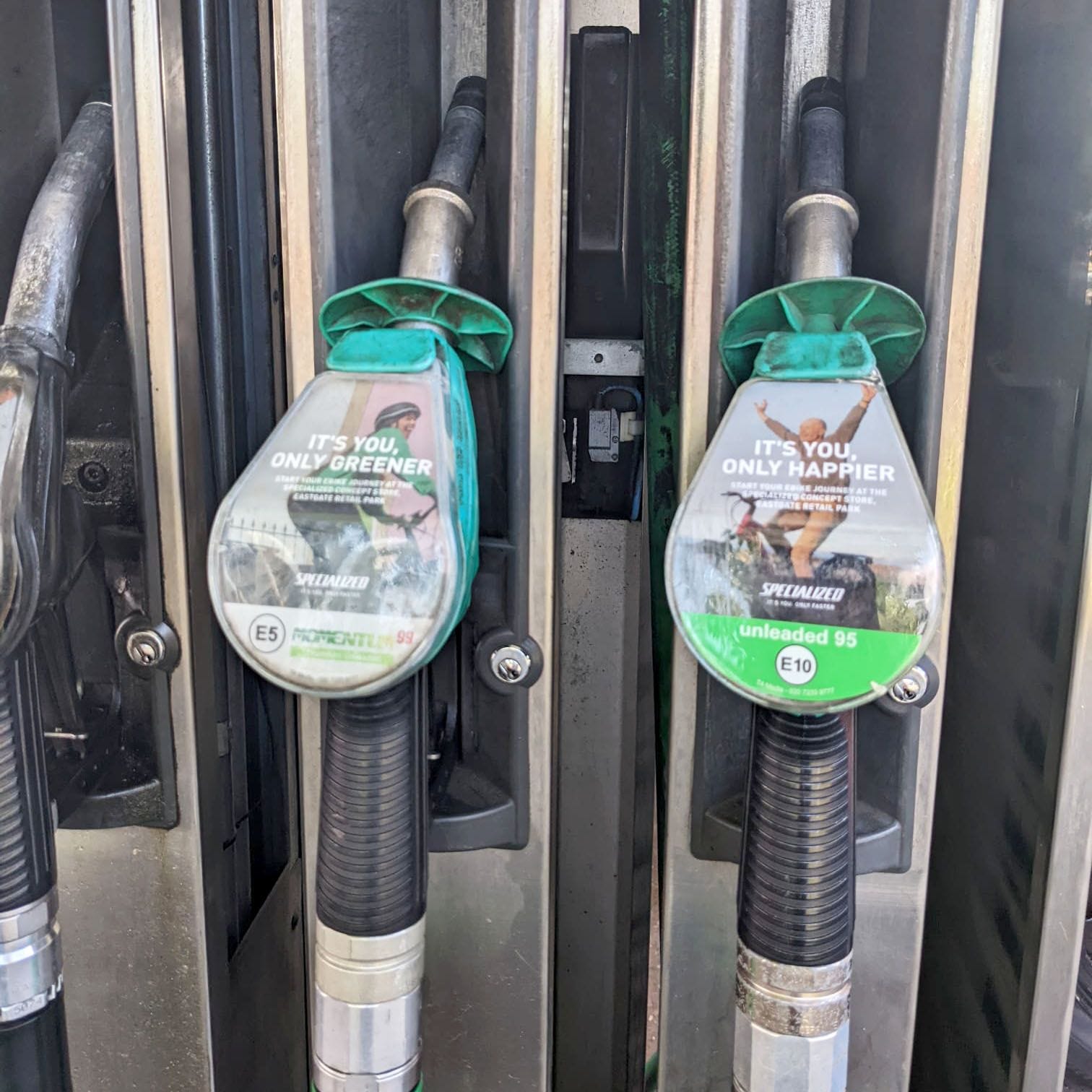
As fuel prices rise once again, it could be a good time to consider switching to an e-bike, as these ads at pumps in Bristol suggested. (Campaign by my agency Fusion for Specialized from a few years back)
ACTIVE TRAVEL WORD OF THE WEEK:
Simplified Zebras: a zebra crossing without Belisha Beacons. They’re pretty undefined because there isn’t the guidance surrounding them, but the principle is that they are on side roads where speeds are slow and they reinforce the pedestrian priority afforded in the Highway Code changes. The Government is being urged to permit them in England, following Wales’ example. Perhaps they will, soon.
Until next time,
Adam Tranter
CEO, Fusion & Founder, #BikeIsBest
This newsletter is brought to you by Fusion, the agency for movers, specialising in communications and public affairs for active travel and mobility.