We’re all about proximity this week: we’ve car dependency on our doorsteps; the power of tackling parking and the importance of proximity in city planning. Breaking away from car-centric urban design is not easy, but it is certainly possible.
BIG STORIES FOR CYCLING ADVOCACY
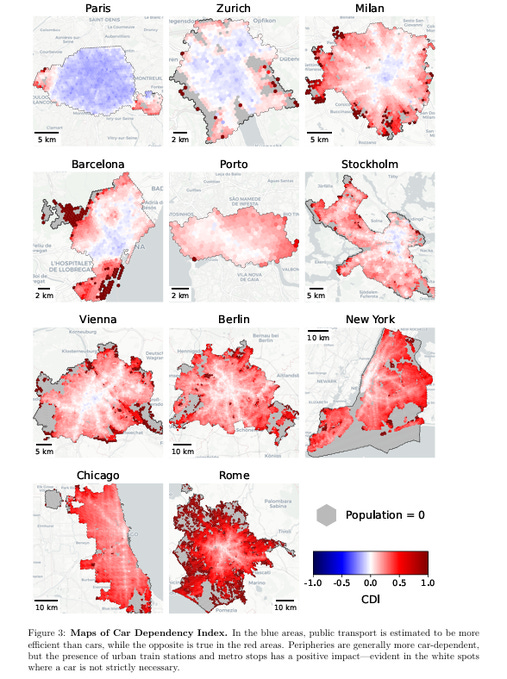
CAR DEPENDENCY: MAPPED. People can access opportunities when they are close, and easy to get to. And while globally, car-centric design has improved access for some, it has bred car dependency - negatively impacting communities, particularly those on the lowest incomes. A study of travel times in European and American cities concludes that, for most, the car is still the quickest way of getting around. Only in Paris and Zurich is it easier to get around by public transport than by car. In Australia, meanwhile, the similar ‘Vampire index’ underscores the cost of car-centric neighbourhoods for residents as fuel prices remain high. Making walking, cycling and public transport more favourable takes strategic planning, it says.
SPEAKING OF PROXIMITY. A new paper by the father of the 15-minute city, Prof. Carlos Morenos, talks about the power of proximity in a new way. What he calls ‘proxilience’ is a hybrid of proximity and resilience, the idea that by having daily needs within a reasonable distance in cities, those cities are more resilient. This can be achieved by using buildings as multi-purpose shared - and flexible - space, allowing for adaptation over time. By having our needs within easy reach, of course, we can reduce the environmental impact of cities, improving their economies and the experience of living within them.
THE REAL URBAN CONSPIRACY? 15-minute cities don’t trap people in their homes - they make walking and cycling a realistic option. This Streetsblog piece argues that the real trap is car-dependency. The ‘hyperproximity’ pledge of Paris’ new mayor, who wants a 15-minute city, it says, mirrors how cities were originally planned: services accessible within walking distance. Today’s cities too often have hour-long commutes stuck in traffic. The piece thankfully stops short of claiming this is a coordinated attack on our freedoms, but it does underline that we pay for this model in our health and climate - and that plenty of money is being made in the car and roadbuilding sectors as a result.
CYCLING AND AGE. Just a thoroughly enjoyable piece written by cycling journalist Nick Christian, celebrating - and defending - the popularity of cycling among those of a certain age. While our performance may decline in other sports, he argues, with cycling it’s possible to remain fairly competitive far later in life. Not that cycling needs to be competitive of course - but it also means you can enjoy it and keep riding fairly long distances, should you wish, well into older age.
AHEAD OF THE KERB? ‘Current parking policy in Scotland imposes avoidable costs on public health, the environment and housing affordability, while reinforcing patterns of car dependency’. That’s the assertion of a new report, Beyond the Kerb. Written by active and public transport campaign group, Transform Scotland, it asserts that the harm of parking Scotland’s 2.6 million cars can be reversed - not least that caused by the growth in SUVs. With one in four Scots having no access to a car there’s a case to be made. It highlights best-practice solutions, including Scotland’s pavement parking ban, Lambeth’s kerbside strategy in London, parking charges by size and weight in Europe, and Nottingham’s workplace parking levy.
OTHER HEADLINES
NO COURAGE FOR BRUM 20MPH. It was disappointing this week to see the lack of political will now in Birmingham for safer streets. Only one candidate (after quite a pause) backed 20mph limits on residential streets. This is perplexing because it’s been Birmingham Labour policy since 2012, data shows 20mph has cut serious injuries by 8-17% and the city declared a road safety emergency. You can’t tackle road danger without tackling speed in residential areas - and 20mph is popular with residents.
INTERESTING GRAPH OF THE WEEK: The balance of car-dependency in European and American cities. Blue means it’s easier to get around by public transport, red is by car, and white is neutral. Key public transport corridors are clearly visible in Milan, Stockholm, Vienna, Berlin, etc., but otherwise cars win out. Source: https://arxiv.org/pdf/2604.01019
ACTIVE TRAVEL WORD OF THE WEEK:
Car dependency index. The extent to which residents in a given area are dependent on cars. This is a useful metric as it makes it possible to map places that are better or worse for non-car transport options - and hopefully allow for targeted solutions.
Until next time,
Adam Tranter
CEO, Fusion & Founder, #BikeIsBest
This newsletter is brought to you by Fusion, the agency for movers, speciali