


This week, it’s very hot across Europe as the continent bakes in an unseasonal heatwave. So it’s appropriate that we ask: what drives heatwaves, can bike lanes help and where do otters fit in? Meanwhile, Oxford Street’s pedestrianisation seems to be going ahead, despite protests from Westminster City Council’s new administration, Helsinki celebrates a safe year and bad pavements can have fatal outcomes.
BIG STORIES FOR CYCLING ADVOCACY
TRAFFIC WORSENS URBAN HEAT. With Europe baking in an early heatwave, thoughts return to how we design and manage our urban realm. The positive impact of tree planting, and planted areas more generally, are well-known. This Conversation article sets out the lesser-known impact of moving traffic on the ‘urban heat island effect’ (see word of the week). Waste energy from cars’ exhaust pipes is expelled as heat, increasing the surrounding temperature by 0.25c to 0.4c. This sounds small but every fraction of a degree can contribute to discomfort, illness and worse - and it’s worth considering when planning cities.
BIKE LANES CAN MAKE IT BETTER. One great thing about repurposing street space for walking and cycling is the way that space can suddenly perform multiple functions. Cardiff is among the cities doing just that - incorporating planting and ecosystem revitalisation alongside its new bike lanes. In a city that’s known for high rainfall - and which is not exempt from heatwaves either, extra shade and absorbent surfaces, not just hard tarmac, is standing the city in good stead for extreme weather events - and helping wildlife. This is led by Welsh legislation requiring water management is built into hardscaping. The local otters seem to approve.
HELSINKI’S YEAR WITHOUT A ROAD DEATH. The Finnish capital just achieved a year without a single registered road death, reports Politico. Although it’s one of Europe’s smallest capital cities, with fewer than 690,000 residents, it follows Oslo in achieving the feat - showing it is possible elsewhere. Traffic engineers cite speed limit reductions, with policing and speed camera enforcement, as key. Relevant to this week’s theme, tree planting has helped narrow the roads, forcing drivers to go slower and more cautiously. New cycling and walking infrastructure and public transport have helped reduce driving in the city, too.
PAVEMENTS FOR HEALTHY AGEING. Portugal’s famous cobbled pavements, popular with tourists, hide a deadly problem. Significant numbers of those who died from pneumonia had fallen on the street in their recent history, research has found. Those falls led to periods of inactivity which worsened mobility and lung health, leaving older people vulnerable to pneumonia infections. Cities looking to enable healthy ageing can and should look to their pavements, and tackle slippery, uneven surfaces with urgency.
SAFER RURAL ROADS. Minor rural roads are some of the most dangerous places to walk and cycle, thanks to a combination of high traffic speeds and a lack of pavements. To try and tackle the problem, and encourage more walking and cycling, Oxfordshire County Council will trial filtering some of its rural roads to through traffic. Designated roads will be fitted with gates and bollards, and lower speed limits - typically 20mph. The council is in the process of identifying lanes where there’s local demand to reclaim the space back from rat-running drivers to walking, cycling and horse riding.
OTHER HEADLINES
OXFORD STREET CHALLENGE DROPPED. It seems Oxford Street will be pedestrianised from this summer as Westminster City Council’s new Conservative council has dropped its promise of a judicial review. Challenging Sadiq Khan’s plans to remove bus and taxi traffic from the street - private cars are already banned - was in the incumbents’ manifesto, and was repeated after elections. The reason, as reported by Dave Hill, seems to be that it was too late to launch the review. Undeterred, the mayor reiterated his commitment to improving ‘Britain’s High Street’ in a walking and wheeling action plan, launched today.
INTERESTING GRAPH OF THE WEEK:
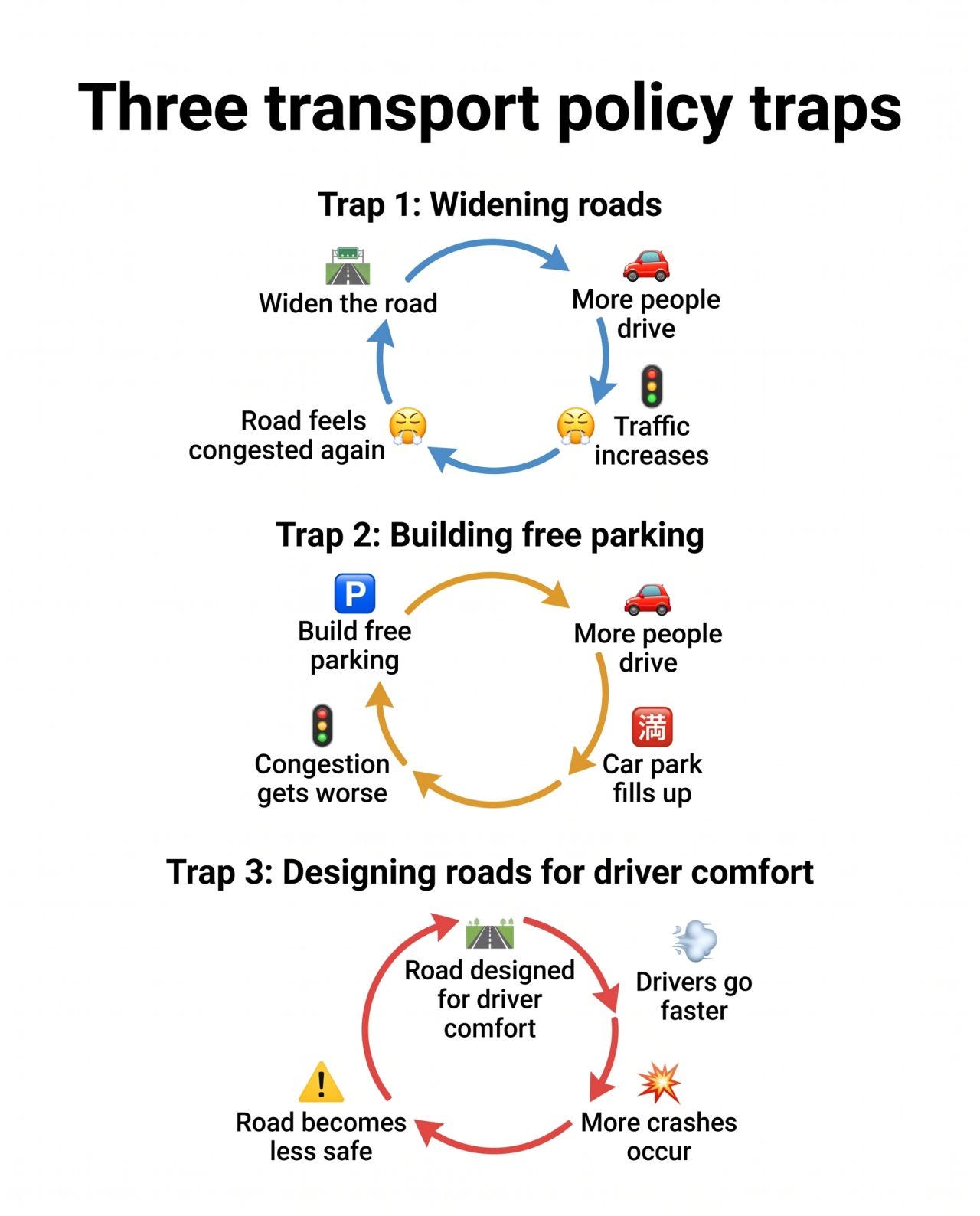
From Australian transport guy, Russell King, is this handy graphic outlining why transport solutions aren’t as simple as they might at first seem. Source: https://www.linkedin.com/feed/update/urn:li:activity:7463355471651840000/
ACTIVE TRAVEL WORD OF THE WEEK:
Urban heat island effect. Concrete and tarmac retain heat from the sun, a heat that builds in summer, creating an island effect around cities. The effect can be reduced by replacing those hard surfaces with trees and plants, which actively cool the surrounding air.
Until next time,
Adam Tranter
CEO, Fusion & Founder, #BikeIsBest
This newsletter is brought to you by Fusion, the agency for movers, specialising in communications and public affairs for active travel and mobility.
