


This week, bus stop bypasses get the go-ahead in the City of London, cycling cities are great for tourism and tickets for the Making Active Places conference goes live. Plus: Leeds’ cycle network expands, and why alternatives to driving haven’t always tempted people out of their cars.
BIG STORIES FOR CYCLING ADVOCACY
LEEDS MEANS CYCLING. Leeds’ cycle network has grown by 113 miles in the past decade, according to the City Council. Dawson’s Corner, near Pudsey, is a huge junction currently being expanded to include cycle lanes - and more lanes for motor vehicles. Inevitably the BBC’s vox pops reveal mixed impressions of the cycle network so far, but progress is undeniable. You can see and plan journeys on Leeds’ routes here, some of which are protected lanes on main roads, and others use measures like Low Traffic Neighbourhoods.
FLOATING BUS STOPS ARE GO. Bus stop bypasses (BSB) are where a cycle route passes behind a bus stop, and passengers cross the lane at stops. While essential for safe cycle networks - without them cyclists must share road space with bus drivers - they need to be accessible. Concerns around the impact on blind and partially sighted people’s access has inspired a pause on their rollout and new national guidance this year. Now, City of London officials have concluded their planned BSBs meet the necessary standards - meaning work on a protected route linking Aldgate and Blackfriars can restart.
MAKING ACTIVE PLACES. Making Active Places is Active Travel England’s flagship placemaking and active travel conference - and tickets are now available. Held in Manchester city center on 22-23 September, the event will bring together the voices shaping the sector from the UK and internationally. Professionals can expect to take home clear learning and guidance to deploy in their roles, as well as exploring some inspiring local regeneration projects. You can find out more, and purchase tickets, here.
BEST CITIES FOR CYCLE BREAKS. When we make space for safe walking and cycling, we make places people want to be in. A great bellwether of this is where we choose to go on holiday. It’s no coincidence some of the most popular tourist cities, from major destinations like Paris, London, Amsterdam, Tokyo and Barcelona, to smaller cities like Ghent, Antwerp and Nice, have invested heavily in quality public realm that’s enjoyable to spend time in. Here’s one list of cycling destination cities, from Momentum Mag.
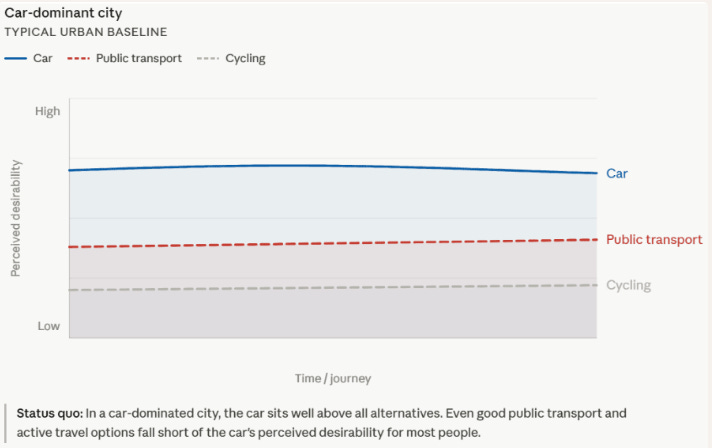
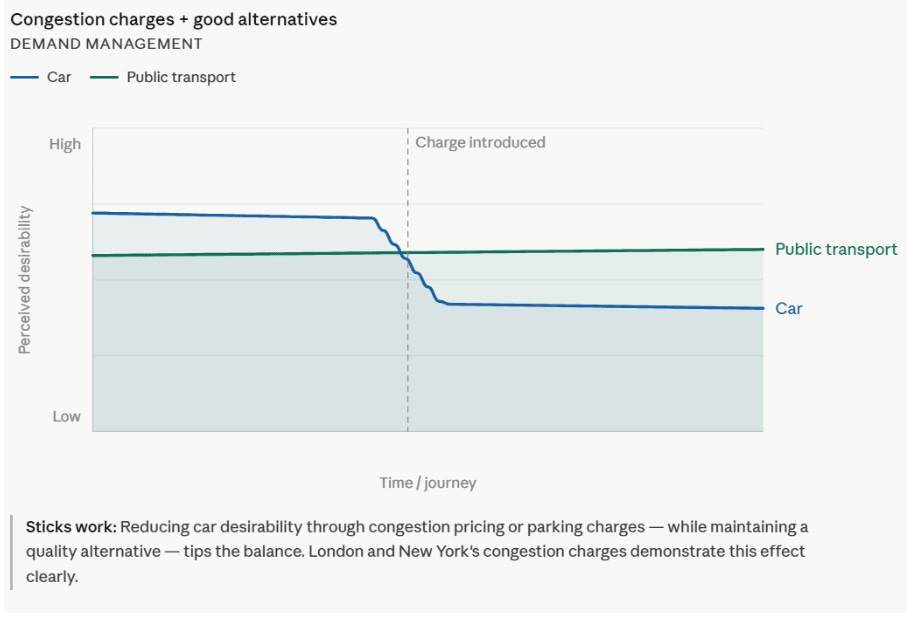
IMPROVING CAR ALTERNATIVES ISN’T ENOUGH. Providing alternatives is essential to cut short car trips, but there’s more to the story. I.e., new rail lines tend to attract customers from other public transport, rather than cars. The Transport Leader newsletter describes each mode’s baseline ‘desirability line’ - which cars often win on perceived convenience, speed, safety and comfort. While being creatures of habit (and making some decisions based on outdated information), we can still change. In terms of ‘carrots’ to shift perceptions, you’ve things like personalised travel planning, marketing, free trial periods and employer travel schemes. ‘Sticks’ to reduce the desirability of driving include parking and congestion charges, and things like Low Traffic Neighbourhoods.
OTHER HEADLINES
ARNIE SAYS RIDE TO WORK. Talking of great marketing, Arnold Schwarzenegger may have been a bodybuilder, an action hero and a politician in his time but he also happens to know the best way of getting to work. Ride your bike, he says, instead of using the car. As well as being great for the places we live, you’ll probably look and feel good for doing it. It’s hard to argue with the message, or the messenger.
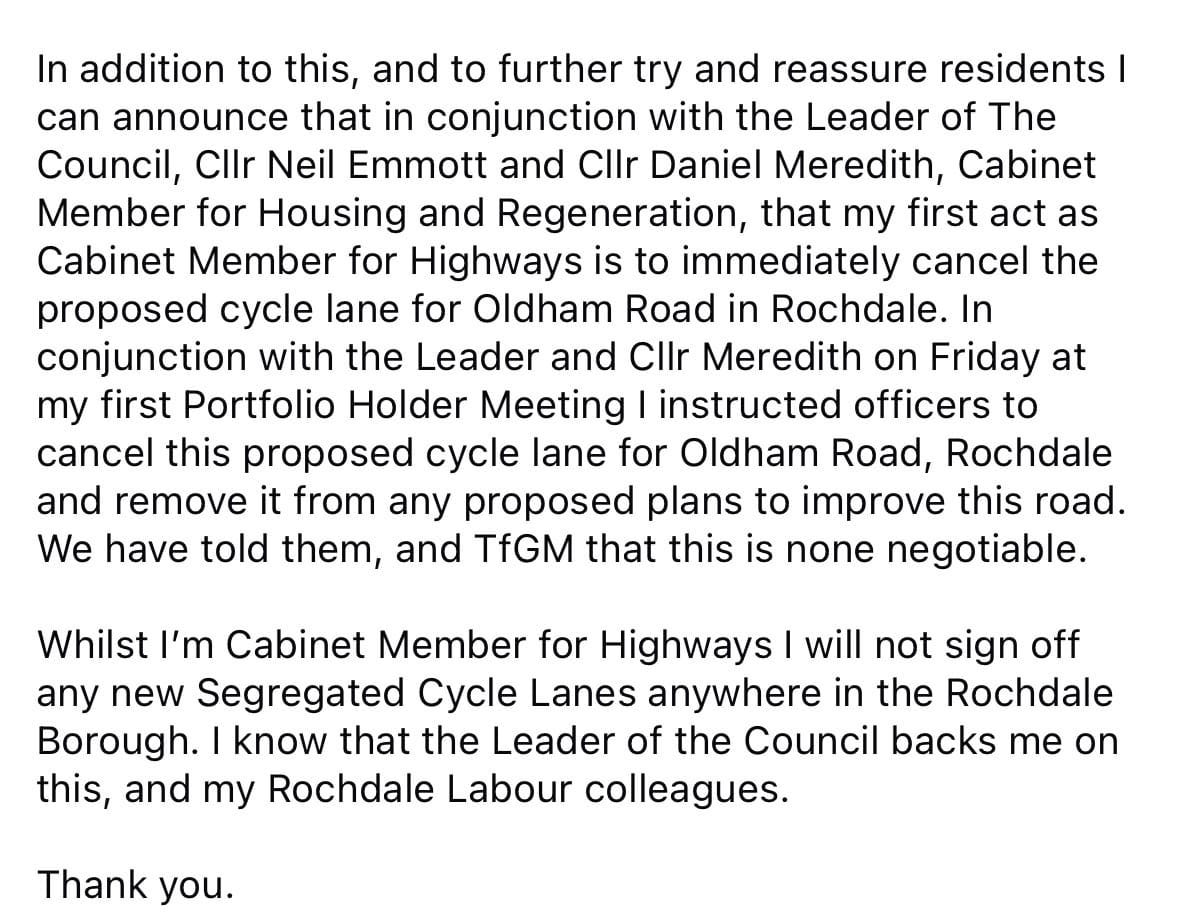
NOT JUST REFORM. It’s not just Reform you need to worry about when it comes to cycle lanes following the local elections. It appears some Labour politicians are still more worried about Reform’s view on cycle lanes than actually trying to deliver proven measures. Here’s the new Labour Cabinet Member for Transport in Rochdale.
INTERESTING GRAPH OF THE WEEK:
On desirability lines, and congestion charging as a way to manage them, along with quality public transport (and walking and cycling routes). Hint: spending public money to subsidise fuel duty for all isn’t the way to give people affordable transport choices, long-term. Source: https://transportlc.org/posts/why-good-alternatives-still-can-t-get-people-out-of-their-cars
ACTIVE TRAVEL WORD OF THE WEEK:
Desire Lines. In architecture and transport, this term refers to unplanned, visible footpaths created over time by pedestrians or animals. These lines represent the shortest or most efficient route between an origin and a destination, revealing how people naturally prefer to navigate a space, which often bypasses the officially paved sidewalks.
Until next time,
Adam Tranter
CEO, Fusion & Founder, #BikeIsBest
This newsletter is brought to you by Fusion, the agency for movers, specialising in communications and public affairs for active travel and mobility.
Thanks for featuring my work.