Recently, I was arguing for a truly national strategy for active travel - after all, it’s what we do for other modes of transport. Meanwhile, a lack of alternatives is costing us and the economy money. Lastly, we’ve two good news stories thrown in for good measure.
BIG STORIES FOR CYCLING ADVOCACY
LONG-TERM PLANNING LOOKS LIKE THIS. A strategy only works with specific and measurable targets. The same should be true of the Government’s Cycling & Walking Investment Strategy 3. Recently, a letter Laura Laker and I coordinated attracted 50 organisations calling for just that. It said CWIS3 needs to treat cycling, walking and wheeling like other transport modes, with a ‘network of networks’, planned nationally and delivered locally, linking existing routes and plans, to be mapped by 2030 with a vision to be completed in 2050.
CAR EXCESS HARMS THE ECONOMY. The tired old adage that driving inevitably helps the economy limps along, but there is another story to tell. Despite the revenue from vehicle and fuel taxes, and soon pay-per-mile for electric vehicles, we lose a lot from car dependence. As this Conversation piece points out, traffic congestion costs us £7.5bn a year, repairing roads £17bn (worsened by larger vehicles and heavier EVs), while inconsistent public transport or active travel alternatives costs vast sums in subsidised private transport. There is another way, the piece says.
WHAT BETTER LOOKS LIKE. The tiny village of Cargo in Cumbria (population 262) recently celebrated a new cycle link towards nearby Carlisle. The mile-long route is a newly-tarmacked verge beside a busy road that was previously scary by bike and inaccessible on foot - and there’s no bus route. It now connects the village with the city, as part of National Cycle Route 7, and means locals won’t have to risk sharing with traffic on the 40mph road. It may be a pavement cycle path, but in rural areas such paths can be a transport lifeline.
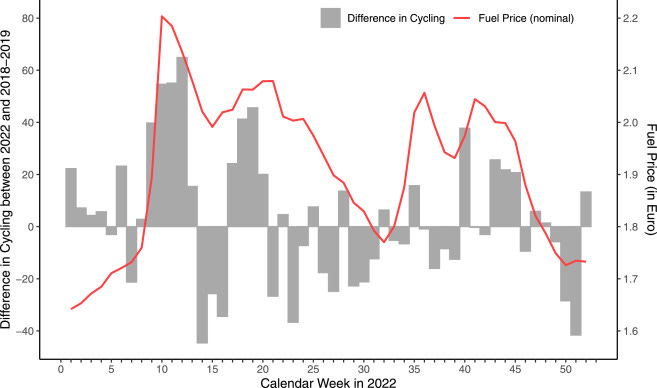
IS THE PRICE RIGHT FOR DRIVING? Driving is heavily subsidised by taxpayers in the UK via fuel duty freezes costing £2.4bn this year, and £120bn since 2011. When fuel costs rise, however, people drive less, as research from Germany shows. Driving isn’t the best option for short journeys but often there’s no choice; by providing better walking and cycling infrastructure we could cut car trips, save people money and boost active travel, but it needs investment. £2.4bn could go a long way to building a national network of safe walking and cycling routes.
STREET FREEDOM. Changing streetspace is inevitably tricky. New UK-based research found both drivers and cyclists prefer protected cycle lanes over painted ones, preferably reallocating road space, not pavement space. Removing car parking is consistently unpopular, even among cyclists, while the strongest opposition, the research found, came from those who saw changes as infringing on their freedom to drive. There was overall support for new cycle routes, including those with strong ‘driver’ identities. One key takeaway is the importance of designing - and framing - bike lanes so they don’t appear to infringe on freedoms.
OTHER HEADLINES
EVEN REFORM BACKS CYCLE ROUTES. The Reform-run North Northamptonshire council has celebrated the opening of a new cycling and walking path between a town centre and railway station. Corby’s new path will provide “a safer and greener environment for everyone”, according to the council leader. Students at a local college will also have a safer, greener way to travel, a spokesperson said - while local people get better access to opportunities.
INTERESTING GRAPH OF THE WEEK: The link between fuel prices and cycling levels. Source: https://www.sciencedirect.com/science/article/pii/S0965856424001940
ACTIVE TRAVEL WORD OF THE WEEK:
Network of Networks. In this case the joining-up of the National Cycle Network, the notional metro mayor backed network announced in the summer, and councils’ Local Cycling and Walking Infrastructure Plans (LCWIPs).
Until next time,
Adam
Adam Tranter
CEO, Fusion & Founder, #BikeIsBest
This newsletter is brought to you by Fusion, the agency for movers, specialising in communications and public affairs for active travel and mobility.